

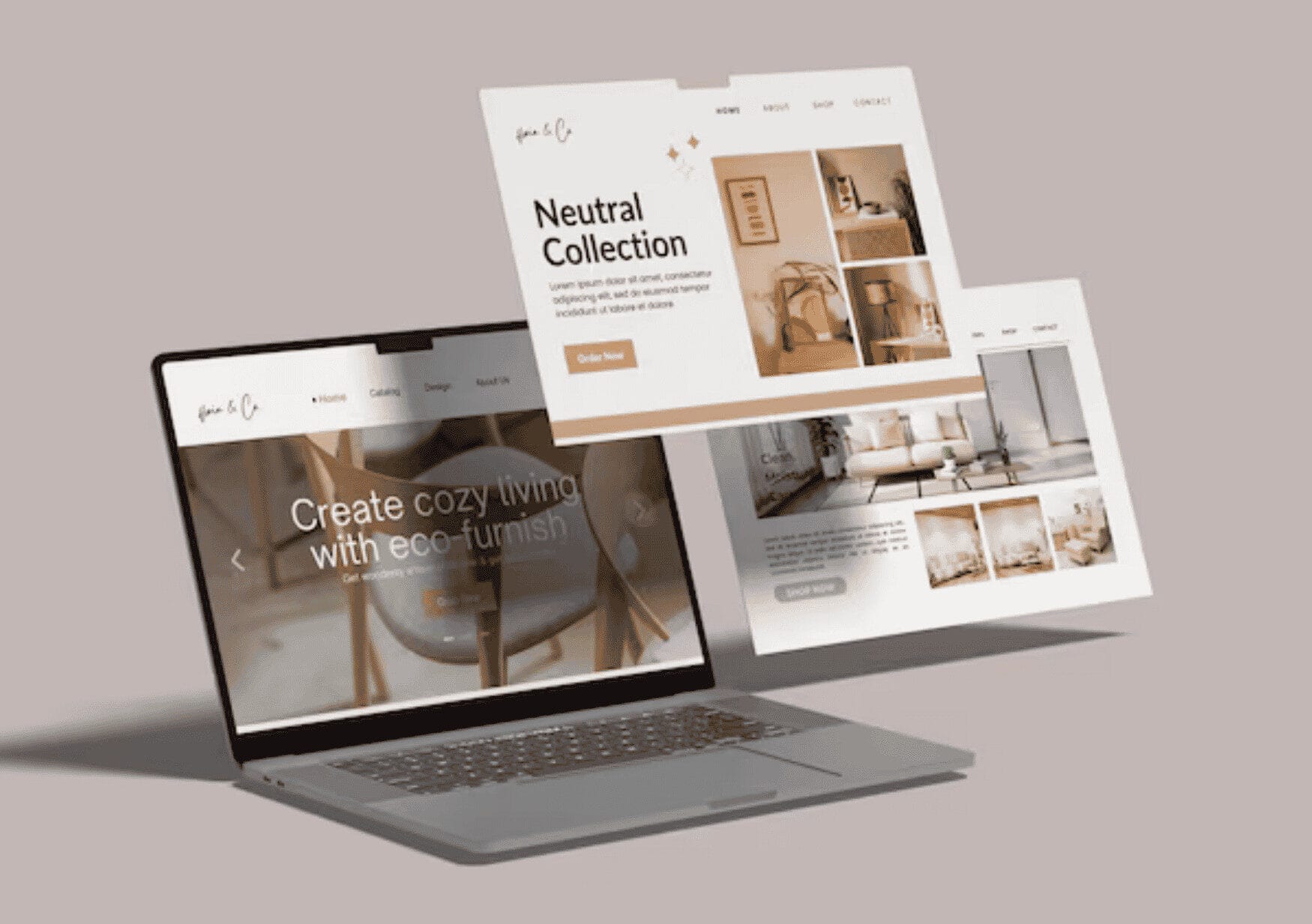
A professional business website should communicate a compelling message, connect with potential customers, establish trust and encourage visitors to take action.
This is where website storytelling becomes important.
Website storytelling is not about writing lengthy company histories or filling pages with promotional language. It is about presenting your business in a way that helps visitors understand their challenges, recognise your solution and see why they should choose you.
Professional Web Design for SMEs
We help businesses and brands scale their customer acquisition and thrive online. Let Ghana’s leading web design agancy develop a premium website for your business today. Click the quote button below to get started;
Here are practical ways to improve storytelling on your business website.
1. Make your customer the main character
One of the biggest mistakes businesses make is making their websites entirely about themselves. Their homepage focuses on when the company was established, its mission, achievements and services without addressing what customers actually need.
Your customers should be at the centre of your website’s story.
Start by identifying:
- Who are your ideal customers?
- What problems are they trying to solve?
- What challenges prevent them from achieving their goals?
- What results are they looking for?
For example, instead of saying, “We provide professional accounting services,” consider: “Spend less time worrying about your finances and more time growing your business.”
The second statement speaks directly to a customer’s needs and desired outcome.
2. Identify the problem before presenting your solution
People are more likely to engage with a business when they feel understood.
Your website should demonstrate an understanding of the challenges your customers face before introducing your products or services.
For example, a web development company’s website could address business owners struggling with an outdated website, poor online visibility or difficulty generating enquiries.
Once visitors recognise their challenges in your messaging, introduce your services as the solution.
The key is to describe problems using language your actual customers understand, rather than generic marketing expressions.
3. Write a compelling homepage headline
Your homepage headline is one of the first things visitors notice. It should communicate your main value proposition clearly and immediately.
Avoid vague headlines such as:
- Welcome to our website.
- Excellence is our priority.
- Your trusted partner for success.
Instead, explain what you offer and the value customers receive.
For example:
Weak: Professional solutions for modern businesses.
Better: Build a professional online presence that attracts customers and grows your business.
Follow your headline with a short supporting paragraph explaining what you do, who you serve and how visitors can benefit.
4. Position your business as the guide
Your customer is the hero of the story, while your business is the guide that helps them achieve their desired outcome.
Demonstrate your expertise without making the entire website a collection of self-promotional statements.
Explain how your products or services work, why your approach is effective and how you help customers overcome their challenges.
Customer testimonials, case studies, professional experience and project portfolios can reinforce your position as a credible solution provider.
5. Show customers what success looks like
People want to understand what changes after they purchase a product or engage a service.
Rather than simply listing features, explain the benefits and outcomes.
For example, a website development company should not only advertise responsive design, SEO integration and contact forms. It should explain how these features help businesses reach mobile users, improve search visibility and generate customer enquiries.
Where possible, use real project results, customer experiences and measurable achievements to demonstrate value. Avoid making promises that cannot be substantiated.
6. Structure your website content as a journey
A good website guides visitors through a logical sequence of information.
Your homepage, for example, can follow this structure:
- Introduction: Clearly communicate what you offer and who you serve.
- Customer challenges: Show that you understand their needs.
- Your solution: Introduce your products or services.
- Benefits: Explain what customers stand to gain.
- Credibility: Present testimonials, experience and relevant projects.
- How it works: Explain the process of working with you.
- Call to action: Encourage visitors to make an enquiry or take the next step.
Each section should build on the previous one rather than presenting disconnected information.
7. Use images and design to reinforce your story
Website storytelling is not limited to written content. Design and visual elements also influence how visitors understand your business.
Use high-quality images, videos, illustrations and graphics that support your message.
For example, a construction company should showcase completed projects, building processes and its team at work. A fashion brand should prioritise product photography and lifestyle imagery.
Avoid using generic stock images simply to fill empty spaces. Every visual should have a purpose.
Your typography, colours, spacing and overall layout should also support your brand identity and make the content easy to read.
8. Build trust with real customer experiences
Visitors are more likely to consider a business when they see evidence that others have had positive experiences with it.
Include genuine customer testimonials, reviews, case studies, completed projects and relevant certifications.
Where possible, explain the customer’s initial challenge, the solution provided and the outcome achieved.
These details make your website more convincing than unsupported claims such as “We are the best in the industry.”
9. Make your calls to action clear
After communicating your value and establishing trust, tell visitors exactly what to do next.
Use specific calls to action such as:
- Request a Free Consultation.
- Get a Quote.
- Shop Our Collection.
- Book an Appointment.
- Contact Our Team.
Place these actions strategically throughout your website, especially after sections explaining your services, benefits and customer results.
Avoid relying on vague buttons such as “Learn More” when a more direct action would be appropriate.
10. Keep improving your website content
Website storytelling is not a one-time exercise. Customer expectations, business offerings and market conditions change.
Review your website regularly to ensure that its content remains accurate, relevant and useful.
Use website analytics to understand which pages attract visitors, where people leave and which pages generate enquiries. Customer feedback, search data and frequently asked questions can also reveal opportunities to improve your messaging.
Your website should evolve as your business and customers evolve.
Effective website storytelling combines customer understanding, strategic messaging, intentional design and clear calls to action.
The objective is simple: help visitors recognise their needs, understand your solution, trust your business and feel confident taking the next step.
A website that tells the right story does more than introduce a company. It creates meaningful connections and turns business offerings into compelling reasons for customers to engage.
At EnspireFX Websites, we believe that great website design starts with understanding the business and the people it serves. We combine strategic planning, professional copywriting, creative design and website development to build digital experiences that communicate value, establish credibility and support business growth.
Visit enspirefx.com to explore our website design and development services.