Breaking Down How Brand Building Strengthens SME Web Visibility and Search Rankings

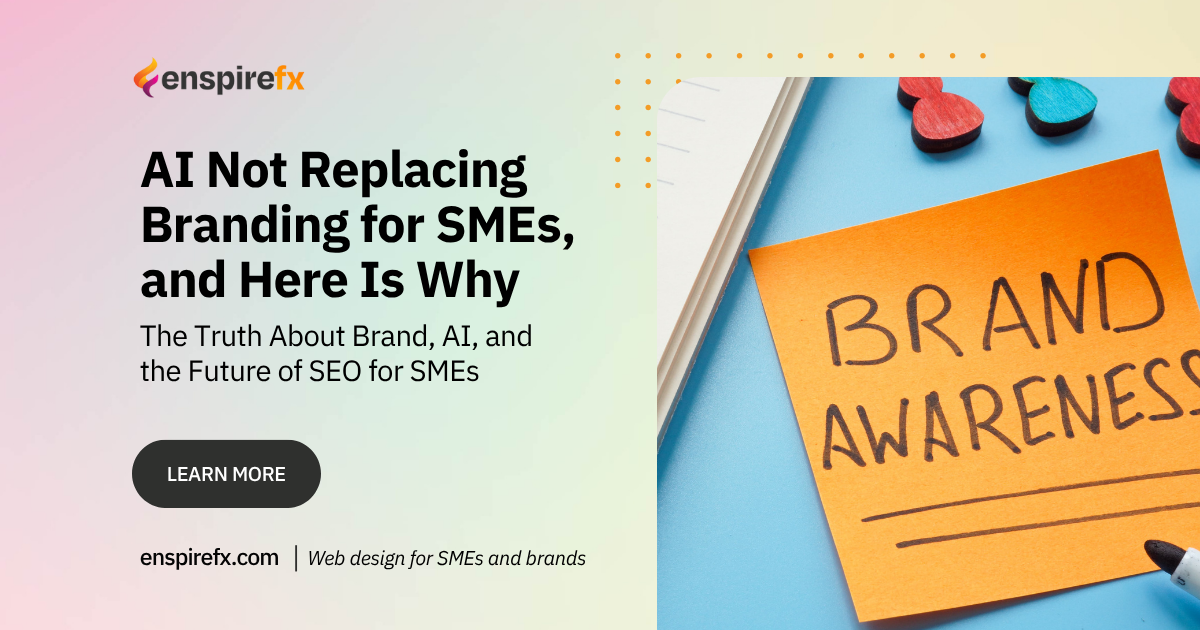
How does brand building impact SME visibility and overall search ranking online? Brand building has become one of the most decisive drivers of online visibility for Small and Medium Enterprises. Search engines increasingly reward companies that demonstrate trust, authority and recognisable identity.
A brand is no longer a cosmetic layer placed on top of a website; it is a strategic asset that shapes how algorithms interpret credibility.
Many SMEs struggle online not because their content is weak, but because their brand presence lacks clarity, consistency or longevity.
Professional Web Design for SMEs
We help businesses and brands scale their customer acquisition and thrive online. Let Ghana’s leading web design agancy develop a premium website for your business today. Click the quote button below to get started;
A strong brand creates signals that make it easier for Google and AI-driven search systems to recognise a business as legitimate, valuable and worth promoting.
A Clear Rationale for Brand-Centric SEO
The challenge begins with the common advice that companies should “just build a brand”. Cyrus Shepard captured the frustration this creates for SMEs when he said that telling someone to build a brand is like telling a homeless person to buy a house.
The process requires a practical system rather than vague inspiration. A defined brand gives SMEs an advantage because it directly supports the three most influential SEO levers: authority and backlinks, click-through rates and user trust.
Each of these factors enjoys measurable improvement when a business commits to a long-term brand strategy rooted in a clear mission and consistent execution.
A strong brand generates branded searches that help validate backlink profiles. Google expects websites with many inbound links to also receive direct interest from users who type the brand name into the search bar.
When these searches exist in meaningful volume, Google can trust that links pointing to the site came from authentic recognition instead of artificial campaigns.
A brand with visibility and credibility naturally attracts links without aggressive outreach. SMEs benefit significantly from this because organic backlinks carry more weight than any paid or manually requested link.
AI systems introduce an additional layer. Large language models now reference brand presence across the web when determining what to present in responses.
A business that appears frequently in search results, articles and online discussions has a higher likelihood of being included in AI-powered summaries, comparisons or lists. This expands reach far beyond traditional SEO.
Brand recognition improves click-through rates on the search engine results page. A familiar name earns more clicks than an unknown one, even when both hold similar positions in the rankings.
SMEs gain an advantage because Google interprets higher click-through rates as a sign that the page is relevant and trustworthy. A known brand also benefits from greater visitor patience.
Users stay longer on sites they trust because they believe that value exists somewhere on the page. Longer visits and lower bounce rates serve as positive quality signals that reinforce ranking strength.
Brand-driven awareness multiplies the impact of content and outreach efforts. A well-established brand finds it easier to launch tools, guides or other “linkable assets” because people are more willing to share resources created by a recognised name.
Canva’s colour palette generator offers a clear example. Its simple function generated more than eight thousand backlinks across over two thousand domains, and the success became possible because Canva already possessed an engaged audience and a credible brand.
Journalists and media outlets respond similarly. A reporter is more inclined to cite an SME that demonstrates real brand presence rather than a business with no audience or clear identity. Credibility drives coverage, and coverage drives authority.
Why SMEs Suffer When Brand Identity Remains Undefined
A weak or unclear brand creates visible disadvantages. SMEs without branded searches signal lower authority to Google.
They also struggle to earn quality backlinks, even when their content proves excellent. Unknown names attract fewer clicks in the search results, and users have no reason to remain on their pages for long.
These businesses face a higher risk of being outranked by companies with a clearer identity, even if both publish content of a similar standard. Without a brand, every SEO effort becomes heavier, slower and more expensive.
The Two Pillars That Define a High-Impact Brand
A strong brand has two essential components. The first is trust built through consistent quality over time. A brand becomes a promise that the business will continue to deliver useful products, good service or competitive pricing.
Repeated delivery of value shapes user expectations and creates the trust that search engines recognise through behavioural signals. The second component is top-of-mind awareness. A strong brand becomes closely linked with a niche.
McDonald’s instantly recalls fast food, OpenAI recalls artificial intelligence, Nike recalls sportswear, and Facebook recalls social media. SMEs benefit when customers associate them immediately with their core service category.
A Practicable System for SME Brand Development
SMEs require a realistic path to brand strength. A four-step framework offers a clear structure that aligns business identity with SEO strategy.
The first step is the establishment of a precise mission. SMEs must decide what they stand for and what they want to be known for. The mission should use benefit-focused language and must live across every public-facing platform, including websites, social profiles and newsletters.
The second step is focus. Most SMEs attempt too many marketing channels at once. A more effective approach involves concentrating on SEO and one core social platform. The business then repurposes material intelligently.
A single text piece may appear on LinkedIn and X. A short video may appear on TikTok, Instagram, Facebook and YouTube. The key is to design each piece primarily for one platform and then adapt it for others without diluting quality.
The third step is consistency. Long-term stability in both output and quality drives the trust and awareness that define strong brands. A daily frequency offers the best results, yet even weekly posting surpasses irregularity.
Edward Sturm’s example illustrates this principle. He released a digital marketing podcast every day for over eight hundred consecutive days. The repetition did more than create content; it carved brand identity.
The fourth step is scaling. Once SMEs gain consistency in their initial channels, they can expand to include partnerships, events, more advanced content formats and new linkable assets.
Improvements to the core product also strengthen brand identity because the product serves as the ultimate source of trust. Every expansion must reinforce the mission rather than drift from it.
Brand Durability and Its Effect on Long-Term SEO Performance
The final insight concerns durability. A brand with unstable messaging fails to build recognition. A brand with short-term intentions fades before trust can solidify.
Search engines reward businesses that demonstrate stability in purpose and identity because users do the same. A durable brand becomes a long-term advantage that compounds every SEO effort.
SMEs that commit to clarity, focus and consistency place themselves in the strongest possible position to win visibility, rankings and customer trust.