

Mobile money, online banking and e-commerce have made everyday transactions easier than ever. You can send money, pay bills, buy products and receive payments without visiting a bank or carrying large amounts of cash.
But have you ever stopped to think about what could happen if the wrong person gained access to your financial information? Protecting your money is therefore not only about having a secure banking app. It is also about your behaviour, awareness and everyday decisions.
A moment of distraction, trusting the wrong person or entering your details on a fake website can have serious consequences.
The behavioural side of financial safety
Many digital financial scams do not begin with sophisticated hacking. They begin with social engineering, where criminals manipulate people into giving away information or authorising transactions themselves.
A scammer may pretend to be a bank official, mobile money agent, online seller, friend or family member. They may create a sense of urgency by saying, “Your account will be blocked,” “Your money is waiting,” or “Send the code now.” The goal is to make you panic or act quickly before you have time to verify the request.
This is why one of the most important financial safety habits is for you to slow down. Would you hand your bank card and PIN to a stranger simply because they claimed to work for your bank? Probably not. So why share the same information over a phone call or message?
Never share your mobile money PIN, banking password, card PIN, Card Verification Value (CVV), One-Time Password (OTP) or verification code because someone claims to be from your bank or mobile money provider. If someone contacts you unexpectedly about your money, end the conversation and contact the organisation through an official channel you found yourself.
Common tactics used by cybercriminals
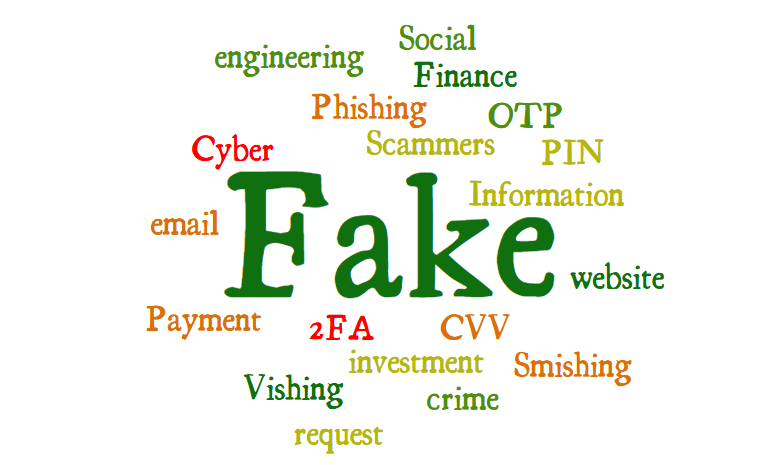
Cybercriminals use different tactics to steal money or financial information. Phishing involves fake emails, messages or websites designed to trick you into entering sensitive information. Smishing is phishing through SMS or messaging platforms, while vishing uses phone calls to deceive victims. You may also encounter fake online shops, fraudulent payment requests, impersonation accounts, fake investment opportunities and messages claiming that you have won a prize.
Another common tactic is creating a sense of urgency. A criminal does not want you to stop and think. They want you to react. A message saying your account will be closed in five minutes, a seller insisting that you pay immediately or someone claiming to be a relative in an emergency should all make you pause. Why would a legitimate financial decision need to be made in a panic? Urgency is not proof that a request is legitimate. In many cases, it is a warning sign.
The technical side of digital financial safety
Your behaviour is important, but technical protection matters too.
- Always use strong and unique passwords for your banking and shopping accounts and
- Enable Two-Factor Authentication (2FA) or other available multi-factor authentication methods.
- Keep your phone’s operating system, banking apps and other applications updated because updates often contain security fixes.
- Download financial apps only from trusted official app stores and
- Be cautious about applications sent to you through links or messaging platforms.

Your device itself should also be protected. Use a screen lock, biometric authentication or a strong device password, and never leave your phone unlocked where another person can easily access it.
Avoid saving sensitive financial information in unsecured notes or messages. If your phone or SIM card is lost or stolen, contact your mobile network provider and financial institutions as soon as possible and take the necessary steps to secure your accounts.
In part 2 of this piece, we will explore issues around use of Public WiFi, making online payments and financial safety tips as shared by the Bank of Ghana (BoG).
Before you click, pay, transfer or share, take a few seconds to verify. When something feels unusually urgent, unusually cheap or unusually secretive, pause. Convenience should never be more important than security.